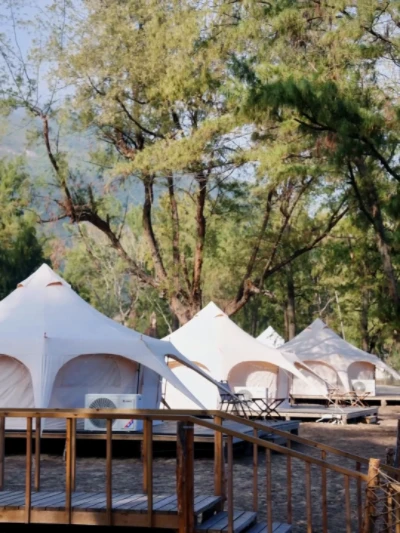
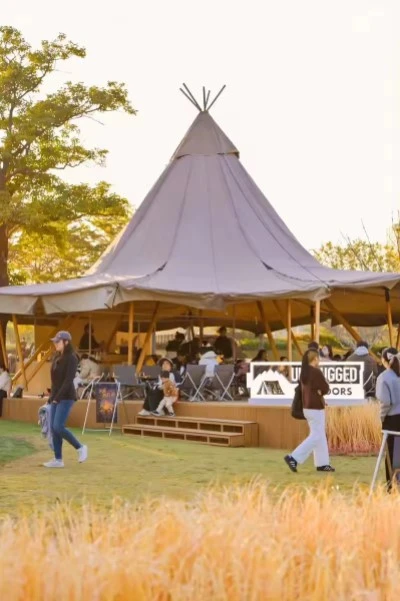
When deciding how to build a large tent in a camp, you need to consider factors such as the scale of the construction, team capabilities, time cost, and safety.
Applicable scenarios and advantages and disadvantages of self-construction
Applicable scenarios
Small camps or simple structures: If the tent structure is simple (such as dome tents, umbrella rib structure tents), and the team has basic construction experience, you can try to complete it independently.
Limited budget: Self-construction does not require the payment of professional team service fees, which is suitable for projects with cost control.
Advantages
High flexibility: The construction plan can be adjusted at any time according to needs, such as connecting multiple tents or adjusting the internal layout.
Team collaboration experience: Suitable for team building activities and enhancing members' collaboration capabilities.
Disadvantages and risks
Low efficiency: Lack of experience may lead to too long time, but you still need to be familiar with the process.
Safety hazards: If the site is improperly selected (such as rugged ground) or the fixation is not firm (such as the pull rope is loose), it is easy to cause safety accidents.
Lack of professionalism: Complex tents require special installation skills, and self-operation may affect performance.
Applicable scenarios and advantages of professional team construction
Applicable scenarios
Large or complex camps: For example, when multiple tents need to be built, kitchen/bathroom facilities need to be connected, or professional lighting systems need to be installed, professional teams are more efficient.
High safety requirements: If the wind and rain protection level is high (such as the individual tents used by the rescue team must meet national standards), professional teams can ensure the stability of the structure.
Time is tight: professional teams are experienced and can complete the construction quickly.
Core advantages
Professionalism and efficiency: The team has a clear division of labor, such as a dedicated person responsible for the tent body and equipment installation, etc., to reduce the error rate.
Safety assurance: The team is familiar with safety regulations, such as ground flatness detection and fire prevention measures (such as when using flame-resistant fabric tents).
High cost: Labor costs and service fees need to be paid, which may exceed the budget.
Limited flexibility: Demands need to be communicated in advance, and there is little room for temporary adjustments.