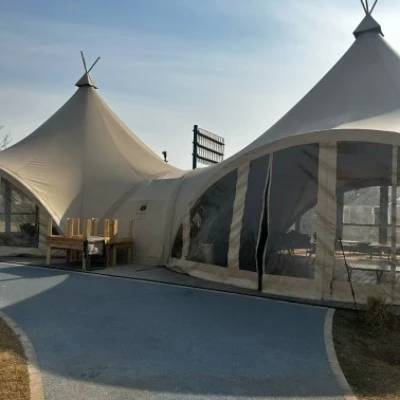
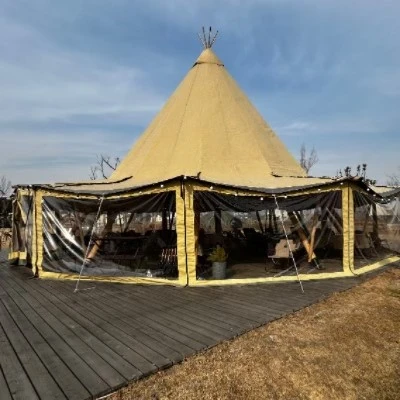
The production process of hotel tents is a complex process that integrates design innovation, material science, process technology and quality management, involving multiple key links.
Design link
Design is the starting point of the production process, and functionality, safety and aesthetics must be considered comprehensively. Designers need to customize solutions according to customer needs, including tent size, structure (such as wind resistance, waterproofness), scene adaptability (such as outdoor weddings, exhibitions), etc., and incorporate modern technology and art elements to enhance product competitiveness. For example, the structural stability design needs to simulate the use scenario in harsh environments to ensure that the tent can withstand challenges such as strong winds and rain.
Material selection and procurement
The quality of the material directly affects the durability and performance of the tent:
Tarp: Use high-strength, waterproof, and UV-resistant canvas or PVC fabric to ensure that it will not fade or crack after long-term use.
Frame: Commonly used steel pipes or aluminum alloys must have the characteristics of lightweight and high strength. Some high-end products use carbon fiber to improve portability.
Accessories: Zippers, ropes, ground nails, etc. must pass rust and tensile tests.
Material procurement requires strict screening of suppliers and batch testing of raw materials to ensure compliance with standards.
Cutting and sewing process
Cutting: According to the design drawings, use automatic cutting machines or manual cutting of tarpaulins to ensure neat edges and reduce losses. For example, complex shapes such as tent doors and windows require precise cutting with the help of heat sealing machines.
Sewing: Use high-precision sewing machines to sew tarpaulins, focusing on the waterproof performance of the seams. For example, the glue pressing process needs to cover the seams to prevent rainwater from penetrating; the stitches need to be tight and even to prevent cracking caused by uneven force.
Special processes such as hand-sewing patterns of Tibetan tents need to be completed through traditional techniques such as electric ironing texture and blue cloth fixing, which are both functional and artistic.
Frame making and assembly
Frame processing: Cut, bend and weld steel pipes or aluminum alloy materials according to the design size, and some use robots to complete high-precision assembly to improve efficiency and consistency.
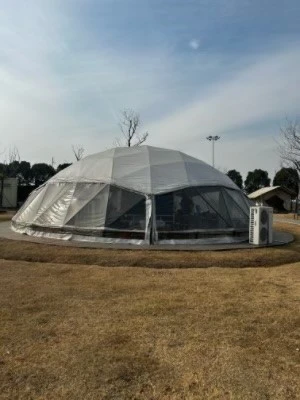
Dynamic/static assembly: Combine the tarpaulin with the frame to ensure that the connectors are firm. For example, glass spherical tents need to be quickly erected by bolts or buckles.
Quality inspection and optimization
Performance testing: including wind pressure resistance test (simulating strong wind environment), waterproof rain test, wear resistance test, etc.
Automated quality inspection: The robot is equipped with a visual recognition system to check dimensional errors, structural integrity and material defects.
Continuous improvement: Optimize the design according to market feedback, such as improving the environmental friendliness of materials or introducing intelligent temperature control systems.
Packaging and transportation
Finished products need shockproof packaging to avoid transportation damage. Some use customized wooden boxes or vacuum compression technology to save space. The packaging design needs to highlight the brand characteristics and attract consumers.
Installation and after-sales service
Site planning: Evaluate the terrain before installation, reasonably layout the tent location, and ensure stability and space utilization.
Technical support: Provide construction guidance, maintenance services and accessories replacement to improve user experience.
Innovative technologies and trends
Intelligent production: Robots are used in material handling, sewing, testing and other links to improve efficiency and consistency.
Customized services: Support personalized customization from color, size to internal facilities (such as air conditioning, lighting) to meet the needs of the high-end market.
Summary
The production process of hotel tents combines traditional craftsmanship with modern technology, and every link from design to after-sales must be strictly controlled. In the future, with the popularization of automation and environmentally friendly materials, the industry will develop in a more efficient, intelligent and sustainable direction.