

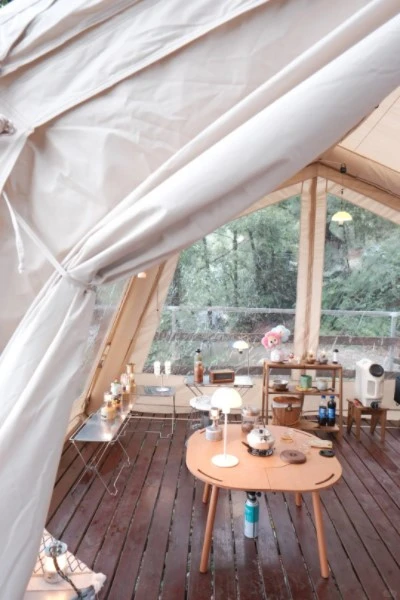
1. Define your campsite's positioning:
• High-end/Comfort/Glamping Campsites:Inflatable tents are ideal, as their comfort and appearance significantly increase the average order value and overall experience.
• Self-Guided/Hiker Campsites:May not be suitable due to the high demands on guest self-management skills and the cost mismatch.
2. Conduct a rigorous evaluation:
• Climate: How frequent are the strong winds, heavy rains, and blizzards? Inflatable tents offer good wind resistance, but snow load capacity needs to be checked against specific model specifications.
•Site: Is the ground level and free of sharp rocks and branches?
• Power Supply: Is there a stable power source for the air pump?
• Maintenance Team:Is there a dedicated team trained for setup, inspection, and repair?
3. Invest in high-quality products and professional suppliers:
•Choose inflatable tents designed specifically for commercial campsites, rather than casual home tents. They are more durable and offer better after-sales service and technical support.
• Inquire with the supplier about details regarding warranties, maintenance training, and spare parts availability.
4. Establish Standard Operating Procedures (SOPs):
Includes: inspection procedures (check air pressure before check-in), inflation/deflation procedures, emergency repair procedures, and a routine maintenance checklist.
5. Consider using "inflatable tents" as a key selling point:
Emphasize in marketing their quick setup, spaciousness, and stylish appearance to attract customers seeking novelty and comfort.